


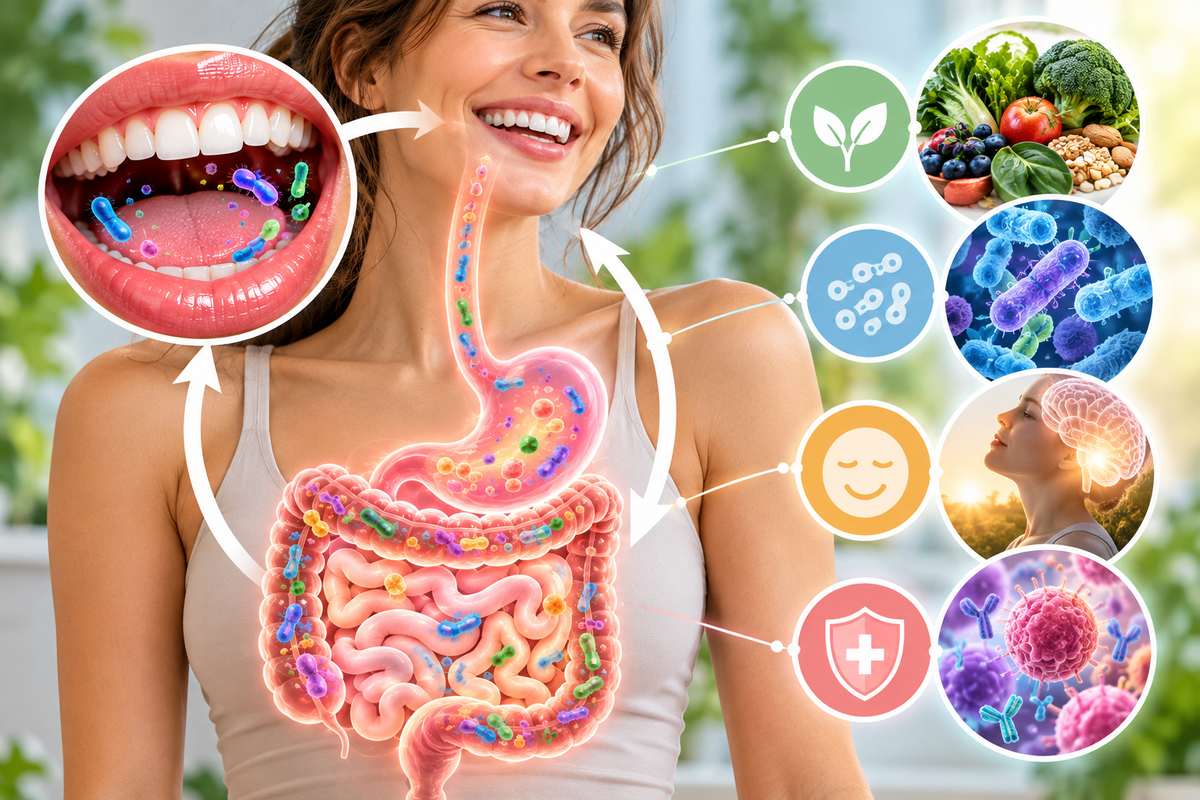
When we think about gut health, we usually think about our stomach, intestines, probiotics and digestion. But there's an important part of the digestive system that often gets overlooked: the mouth.
Every meal, every bite and every sip begins a journey through your digestive tract. And that journey starts long before food reaches your stomach.
Your mouth doesn't simply help you enjoy your food. It plays an essential role in breaking food down, preparing it for digestion and supporting everyday oral health.
It's also home to a fascinating community of microorganisms known as the oral microbiome.
Scientists are increasingly exploring how the oral microbiome and gut microbiome interact, revealing just how interconnected different parts of our bodies can be.
At FISA Health, we believe understanding these connections is an important part of looking after your overall wellbeing.
Because better wellbeing starts with understanding the foundations.
1. Your Digestive Journey Begins in Your Mouth
Most of us associate digestion with the stomach and intestines, but the process actually begins the moment we start eating.
Your mouth performs two important functions.
Chewing breaks food down.
Your teeth break food into smaller pieces, increasing the surface area available for digestive enzymes to work on later.
Saliva begins chemical digestion.
Saliva moistens food, makes it easier to swallow and contains an enzyme called salivary amylase, which begins breaking down starch.
This means that your mouth is an active part of digestion, rather than simply the entrance to your digestive system.
Taking time to chew food properly, maintaining good oral hygiene and looking after your teeth are all sensible parts of everyday wellbeing.
The FISA Perspective
Looking after digestion isn't just about what happens in your stomach. It's also about recognising the role that different parts of your digestive system play, starting with your mouth.
2. Meet Your Oral Microbiome
You may already be familiar with the gut microbiome — the vast community of microorganisms living in your digestive tract.
But did you know that your mouth has its own microbiome?
Your teeth, tongue, gums and saliva provide habitats for hundreds of different types of microorganisms, including bacteria.
Many are normal residents of a healthy mouth.
The goal of good oral hygiene isn't to eliminate every bacterium. It's to maintain healthy teeth and gums while managing the buildup of plaque and reducing the risk of problems such as tooth decay and gum disease.
The oral microbiome is influenced by several everyday factors, including:
-
How regularly and effectively you clean your teeth
-
The foods and drinks you consume
-
Your saliva and oral environment
-
Smoking and tobacco use
-
Certain medications
-
Your general oral health
Researchers are studying how changes in oral microbial communities relate to oral and wider health.
It's a reminder that the mouth is a complex living environment, not simply a collection of teeth.
3. The Mouth–Gut Connection: What Does the Science Say?
Here's where things become particularly interesting.
Your mouth and gut are connected by the digestive tract, and throughout the day, you naturally swallow saliva containing microorganisms from your mouth.
Researchers have discovered that some oral microorganisms can also be detected further along the gastrointestinal tract.
This has led scientists to investigate what is known as the oral–gut microbiome axis.
What Is the Oral–Gut Microbiome Axis?
It's a term used to describe the potential interactions between the microorganisms living in your mouth and those living in your digestive system.
Although these microbial communities are very different, they are not entirely isolated from one another.
A scientific review published in Nature Reviews Microbiology in 2024 examined evidence that oral microorganisms can reach and, under certain circumstances, colonise parts of the gastrointestinal tract.
However, the researchers also emphasised that much remains unknown about exactly how these interactions influence health and disease.
This is an exciting area of scientific research, but it's important not to overstate what we know.
We cannot assume that improving oral hygiene will automatically improve the gut microbiome, or that an oral-care product can treat digestive problems.
What we can say is that oral health is an important part of overall health, and the relationship between the mouth and gut deserves greater attention.
4. Why Everyday Oral Care Matters
Maintaining good oral hygiene helps protect your teeth and gums and supports a healthy mouth.
A consistent routine doesn't have to be complicated.
Brush Twice a Day
Brush your teeth twice daily for around two minutes using a fluoride toothpaste suitable for your needs.
Fluoride helps protect teeth against decay.
Clean Between Your Teeth
Interdental brushes or floss can help clean areas that an ordinary toothbrush may not reach effectively.
Be Mindful of Sugar
Frequently consuming sugary foods and drinks increases the risk of tooth decay.
Reducing the frequency of sugar exposure can help protect your teeth.
Stay Hydrated
Saliva helps lubricate the mouth, supports swallowing and contributes to the mouth's natural protective processes.
Drinking enough water is a useful everyday habit.
Don't Skip Dental Check-Ups
Regular dental care helps identify and manage problems before they become more serious.
Small, consistent habits are often the most practical place to begin.
At FISA Health, we offer a selection of dental and oral-care essentials to complement your daily hygiene routine.
5. What About Probiotics and the Oral Microbiome?
Probiotics are often associated with digestive health, but scientists are also investigating their potential applications in oral health.
Certain strains of live microorganisms have been studied for their effects on the oral environment, including dental plaque and gum health.
An important point is that not all probiotics are the same.
Different products contain different microbial strains, and the findings from research on one strain cannot automatically be applied to another.
A probiotic designed for digestive use is not necessarily suitable for oral-health purposes, and vice versa.
Shop Probiotics from FISA Health.
6. Supporting Digestive Wellbeing Beyond the Mouth
Although digestion begins in the mouth, the rest of the digestive system performs many essential functions.
Your stomach and intestines help break down food, absorb nutrients and process material that the body doesn't use.
Your large intestine is also home to a complex microbial ecosystem.
A balanced approach to digestive wellbeing involves more than taking a single supplement.
Include Fibre-Rich Foods
Vegetables, fruit, wholegrains, pulses, nuts and seeds provide dietary fibre.
Different types of fibre have different properties, and consuming a variety of fibre-rich foods is an important part of a balanced diet.
Eat a Varied Diet
A varied diet helps provide the vitamins, minerals, protein, fats and carbohydrates your body needs.
Stay Hydrated and Active
Adequate hydration and regular physical activity can help support normal bowel function.
Understand Your Supplements
Live-culture supplements, fibre products and digestive enzymes are different categories of products with different intended uses.
Whether a supplement is appropriate depends on your needs, its ingredients and the evidence supporting its use.
At FISA Health, our digestive wellbeing collection includes products such as:
Optibac Every Day Max - High strength, high quality probiotics.
Udo's Choice Super 8 Gold — a multi-strain live-culture supplement.
Udo's Choice Digestive Enzyme Gold — a formula containing plant-based digestive enzymes.
These products can be explored as part of your nutritional routine, but they are not substitutes for a balanced diet or professional assessment of persistent digestive symptoms.
Explore Probiotics & Gut Health
7. How Does This Connect to Natural Energy?
At FISA Health, our philosophy is built around understanding the foundations of everyday energy and vitality.
Nutrition is one of those foundations.
Your digestive system helps make nutrients from food available to your body, while certain vitamins and minerals contribute to normal energy-yielding metabolism.
For example, magnesium and vitamin B12 contribute to normal energy-yielding metabolism, and both have recognised roles in reducing tiredness and fatigue.
But that doesn't mean a toothpaste or probiotic will directly increase your energy levels.
Instead, the connection is about understanding how the body works as a whole.
Oral health, digestion, nutrition, sleep and physical activity are all important aspects of wellbeing.
Rather than looking for a quick fix, we believe in looking after the foundations.
That's what our five Energy Foundations are all about:
GUT — Understanding digestion, the microbiome and digestive wellbeing.
NUTRIENTS — Exploring essential vitamins, minerals and everyday nutrition.
REST — Recognising the importance of sleep and recovery.
MIND — Supporting mental wellbeing through healthy habits and appropriate nutrition.
VITALITY — Embracing movement, activity and everyday living.
8. Your Mouth Is a Good Place to Start
The next time you think about gut health, remember that your digestive system begins in your mouth.
It's where food first gets broken down, where saliva starts working and where a diverse microbial community lives.
The relationship between the oral and gut microbiomes is a developing area of science, and there is still much to discover.
But one thing is already clear: looking after your mouth is an important part of looking after yourself.
You don't need to overhaul your entire routine overnight.
Start with the basics. Brush effectively, clean between your teeth, enjoy a varied diet and take an informed approach to your wellbeing.
Because understanding your health is the first step towards making better choices.
FISA HEALTH — FEEL MORE ALIVE.
From the Foundations Up.
Health information: This article is intended for general educational purposes and is not a substitute for professional medical or dental advice. If you experience persistent digestive symptoms, bleeding gums, dental pain or other health concerns, seek advice from an appropriately qualified healthcare professional.


Share:
What Is Hydroxyapatite Toothpaste – and Why Is Everyone Talking About It?